VENTILATOR
Mechanical ventilators are mainly used in hospitals and in transport systems such as ambulances and MEDEVAC air transport etc.
A ventilator is a medical machine that helps a person breathe when they are unable to breathe properly on their own. It moves air in and out of the lungs to provide oxygen and remove carbon dioxide.
Why is a Ventilator Used?
Ventilators are used when someone has:
Severe breathing problems
Lung infections (like pneumonia)
Injuries affecting breathing
After major surgery
Certain illnesses that weaken breathing muscles
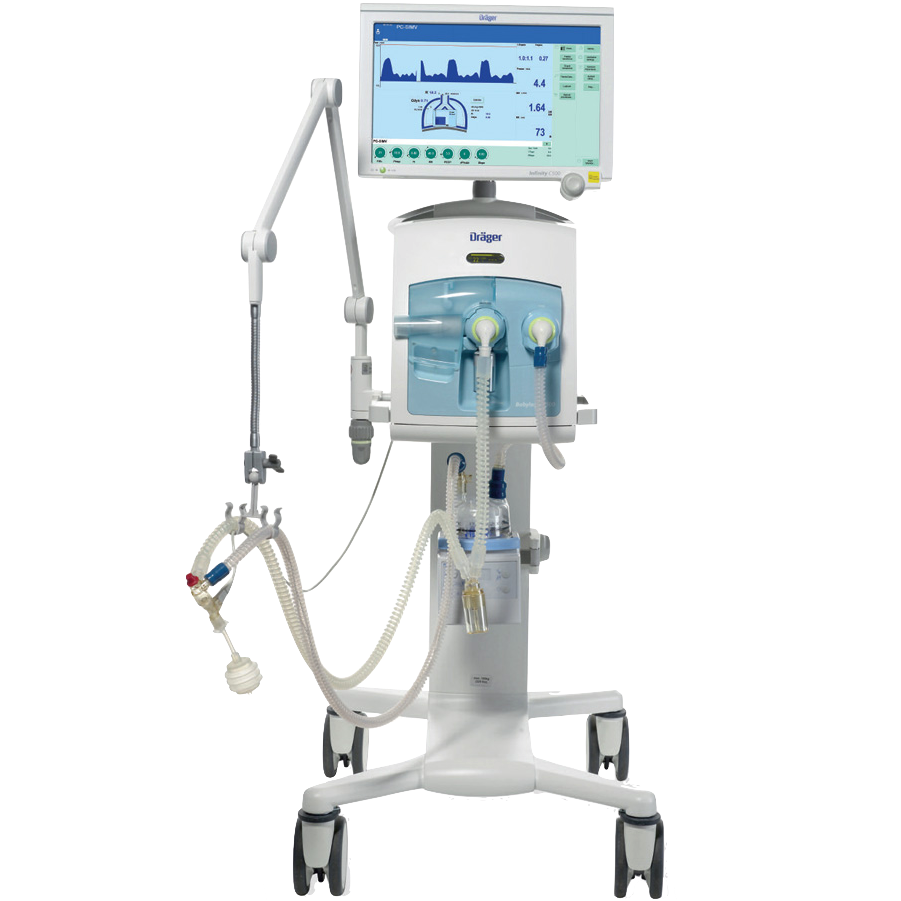
How Does a Ventilator Work?
Air with oxygen is pushed into the lungs through a mask or tube
The machine controls:
Breathing rate
Amount of oxygen
Pressure of air
It supports breathing while the body heals
Types of Ventilation
Invasive ventilation – uses a tube placed in the airway
Non-invasive ventilation – uses a face or nose mask
Mechanical ventilation – fully or partially controlled by the machine
Benefits of a Ventilator
Helps maintain proper oxygen levels
Reduces strain on the lungs
Can be life-saving in emergencies
Supports recovery from serious illness
Risks and Precautions
Infection risk if used for long periods
Lung irritation if settings are incorrect
Requires trained medical supervision
Conclusion
A ventilator is a critical life-support device used in hospitals to assist patients with breathing. When used correctly, it plays an important role in saving lives and supporting recovery.