BIPAP
RESmart GII Auto (APAP) adopts advanced sensor technology, automatically tracks user’s respiratory. The intelligent control system provides users with reliable therapy of Obstructive Sleep Apnea (OSA).
Features:
Innovative tracking technology ensures accurate and comfortable therapy
Unique sensitivity setting offers individual therapy algorithm, makes every user get the most comfort
Ramp capabilities allow a 0-60 minutes time period with adjustable ramp starting pressure
Auto on/Auto off
Alert when accidental power off
In time alert function when mask/tubing off line
Automatic leakage and altitude compensation
Unique Delay-off feature protects RESmart from humidity hazard
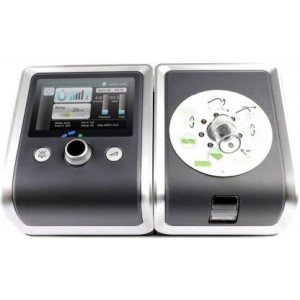
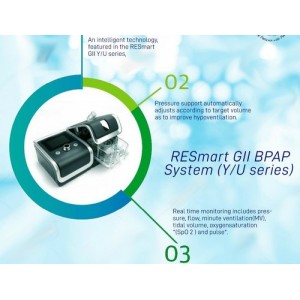
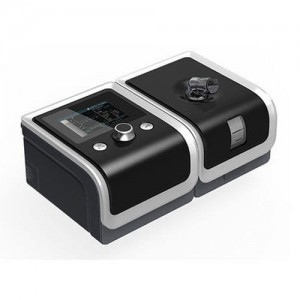
A BiPAP (Bilevel Positive Airway Pressure) machine is a device used to assist people with breathing, especially those who have conditions like sleep apnea, COPD (Chronic Obstructive Pulmonary Disease), and other respiratory issues. The machine delivers two levels of pressure:
IPAP (Inspiratory Positive Airway Pressure): The higher pressure delivered during inhalation to help you breathe in.
EPAP (Expiratory Positive Airway Pressure): The lower pressure during exhalation to keep your airway open and prevent it from collapsing.
How the BiPAP Machine Works:
The BiPAP machine is connected to a mask or nasal pillow that fits over your nose or mouth, providing a constant flow of air. This helps people who struggle to maintain their airway during sleep.
The machine has settings that are customized for the user’s specific needs, like the pressure levels for both IPAP and EPAP.
Key Features:
Automatic adjustment: Some BiPAP machines can automatically adjust the pressure based on the user’s breathing patterns.
Humidifier: To prevent dryness in the airways, many machines come with a humidifier that adds moisture to the air.
Data tracking: Many BiPAP machines have a built-in feature that tracks usage, pressure levels, and other data, which can be shared with a doctor.
Benefits of BiPAP:
Improved sleep quality: For people with sleep apnea, the machine helps maintain airflow, improving sleep quality and reducing snoring.
Less effort in breathing: The machine reduces the effort needed to breathe, making it easier for those with respiratory conditions to get oxygen.
Preventing complications: By keeping airways open, the BiPAP helps prevent complications like hypoxia (low oxygen levels) and hypercapnia (high carbon dioxide levels).
Common Conditions Treated with BiPAP:
Obstructive sleep apnea (OSA)
Central sleep apnea
Complex sleep apnea syndrome
COPD and other chronic lung diseases
Neuromuscular diseases that affect breathing
- Two Pressure Levels: Unlike a CPAP machine, a BiPAP machine delivers two different levels of air pressure: a higher pressure during inhalation (IPAP) and a lower pressure during exhalation (EPAP).
- Delivers Pressurized Air: The machine delivers the regulated air through a mask that the user wears over their nose, which helps maintain a steady airflow into the lungs.
- Assists Breathing: This pressurized air helps keep the airways open, preventing interruptions in breathing and making it easier to inhale and exhale.